Clean
Architecture
For Web Developers
Nils Röhrig @ DWX 2026
Introduction
Agenda
01.Clean Architecture
core idea & fundamentals
02.Hexagonal Architecture
practical usage via ports-and-adapters
03.Why it Matters
benefits & challenges
04.Execution
bring it to life in code
What we're gonna talk about today
What is Clean Architecture?
Who has heard about it?
Who has understood everything about it?
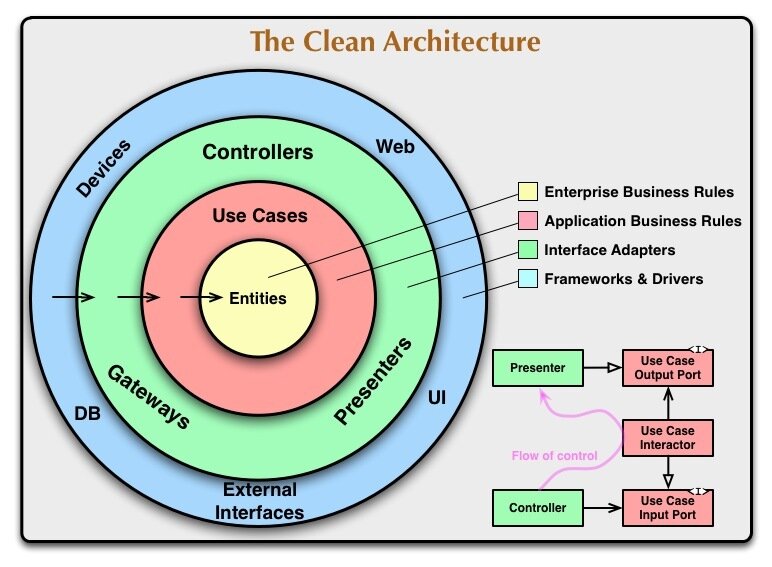
Clean Architecture
As coined by Robert C. Martin
Diagram by Robert C. Martin on The Clean Code Blog
Clean Architecture
As coined by Robert C. Martin
An actionable idea that consolidates multiple architectural approaches.
- Concentric Circles
- Multiple Layers
- Inverted Control Flow
Fundamental rules of the business.
The Business Core
Enterprise Business Rules & Entities
The stuff that generates value for the business.
- Broadly applicable
- Rarely changed
- Shared everywhere
- Convey no
technical details
The Application Capabilities
Application Business RUles
Stuff that makes an application useful for
the business.
- Define app-specific
use cases - Apply business
entities & rules - Still convey no
technical details
The Technical Translators
INterface Adapters
Stuff that connects
the application to the
real world.
- Translate between core and external systems
- Build abstractions over the outer world
- Convey the necessary
technical details
The Technical Details
Frameworks & drivers
The external systems used by the application.
- Databases, UI frameworks, service providers, ...
- May or may not contain a lot of your own code
- Technical in their
very nature
The point is Separation of Concerns.
We want business and application rules to stay blissfully unaware of technical details.
So, What's the Point?
Clean Architecture
The Heart of the Matter
The Dependency RUle
The Heart of the Matter
The Dependency RUle
Source code dependencies
can only ever point inwards!
- The most important rule
- Essential for decoupling
- Requires abstraction
The Heart of the Matter
The Dependency RUle
Source code dependencies
can only ever point inwards!
- The most important rule
- Essential for decoupling
- Requires abstraction
Dependency
Inversion
Invert source code dependency directions.

Photo by Vidar Nordli-Mathisen on Unsplash

The Wrong Direction
Dependency Inversion

The Right Direction
Dependency Inversion

The Abstraction
Dependency Inversion

The Composition
Dependency Inversion
Side Notes
Clean Architecture
Clean Architecture does not require exactly four layers!
- The rules matter more
than the count - Add layers if useful,
remove if not - The principles provide
the value, not the shape
Getting
Practical
Hexagonal Architecture
Also known as Ports-and-Adapters.
Hexagonal Architecture
As coined by Alistair Cockburn
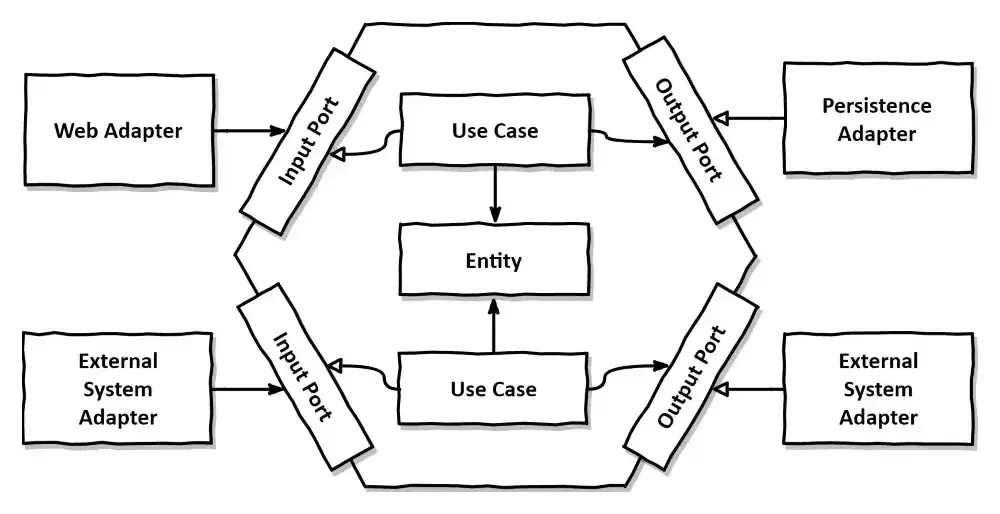
Diagram by Tom Hombergs on Reflectoring.io
Inside the Hexagon
Hexagonal Architecture
Inside the hexagon lives the application core.
- Business Objects
- Business Rules
- Use Cases
Drivers License
Hexagonal Architecture
On the left-hand egde live the input pOrts.
- Exposed to the outside
- Implement use cases
- Allow outside to drive the application
Application Drivers
Hexagonal Architecture
Outside to the left live the input adapters.
- Drive the application via input ports
- Can be anything
Using External Systems
Hexagonal Architecture
On the right-hand egde live the Output pOrts.
- Exposed to the outside
- Describe Requirements
- Allow inside to drive external systems
Adapting External Systems
Hexagonal Architecture
Outside to the right live the output adapters.
- Driven by the app
- Implement Requirements
Same Idea, Different Shape
Hexagonal Architecture vs. Clean Architecture
The Dependency Rule holds true!
- Source dependencies point inwards
- Inside is decoupled from outside
I prefer Cockburn's approach
for a couple of reasons:
- Less convoluted
- Fewer layers
- Easier to reason about
- Easier to start with
- Can grow later
My Personal Preference
Hexagonal Architecture vs. Clean Architecture
Benefits &
Challenges
Why it Matters
01.Attributes
- True separation of concerns
- Boundaries are enforced by design
- The core declares its requirements
- The Outer world merely fulfils them
Benefits & Challenges
Why it Matters
Benefits & Challenges
Why it Matters
02.Consequences
- Portability: The core does not care about externalities – just add adapters
- Stability: Changes on the outside have no effect on the inside
- Optionality: Delay decisions to the last possible moment
- Maintainability: Structure helps humans and machines alike; testing is very easy
Benefits & Challenges
Why it Matters
03.What to keep in mind
- Adds a fair amount of boilerplate
- Overkill for very small or simple
CRUD applications - Boundaries are not always
easily defined
How to Tackle a
Business Problem...
Domain Modelling
...with Hexagonal Architecture in mind!
01.Identify Participants
Start with the Business Needs
Domain Modelling
02.Find activities & Artifacts
03.Derive Domain Concepts
Case Study
Contract Approval Flow
01.Draft
Salesperson drafts a contract
03.Rework
Salesperson reworks draft
02.Review
Supervisor sends feedback
04.Sign-Off
Supervisor approves draft
05.Send
Supervisor sends Contract
The Salesperson
01.Identify Participants
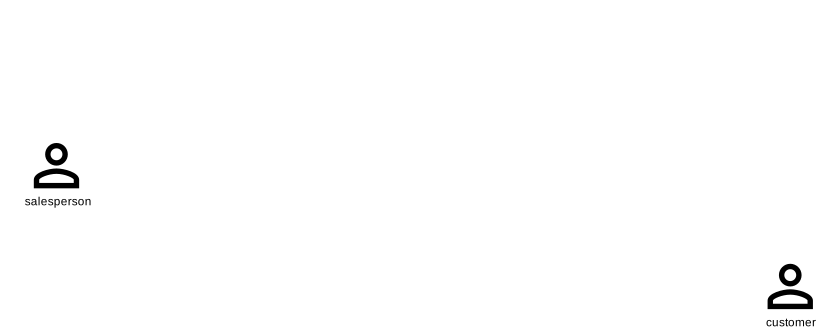
The Customer
01.Identify Participants
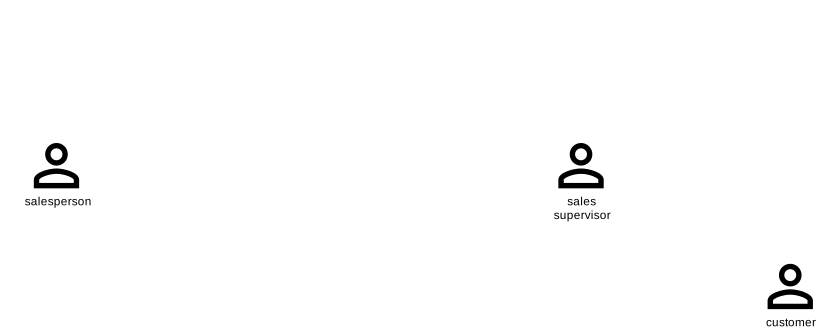
The Sales Supervisor
01.Identify Participants
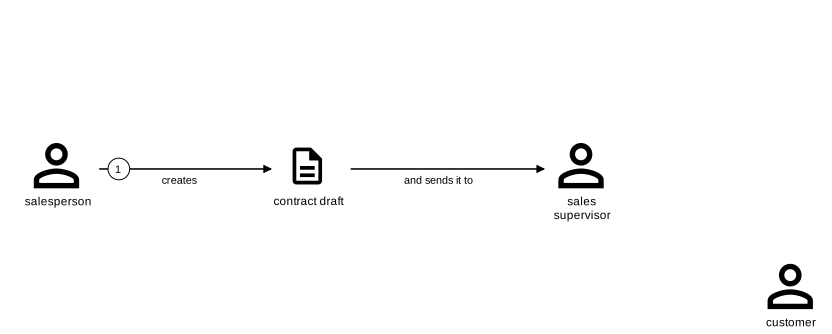
Contract Draft Creation
02.Find Activities & Artifacts
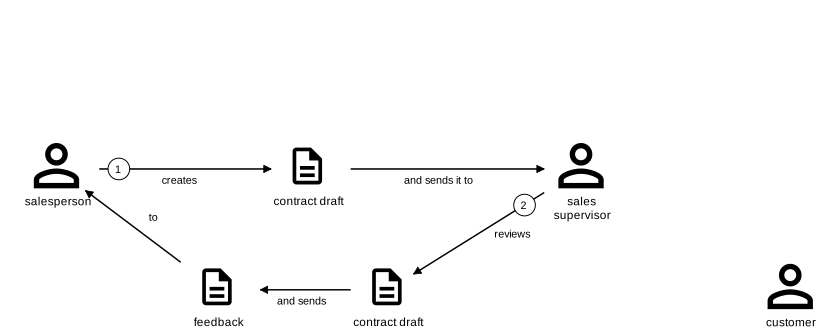
Review & Feedback
02.Find Activities & Artifacts
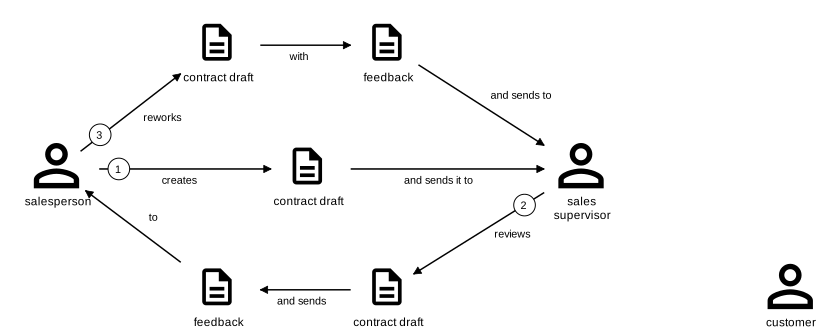
Contract Draft Rework
02.Find Activities & Artifacts
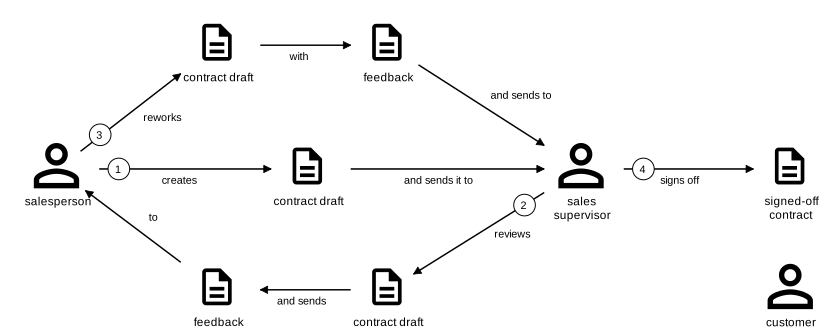
The Contract Sign-Off
02.Find Activities & Artifacts
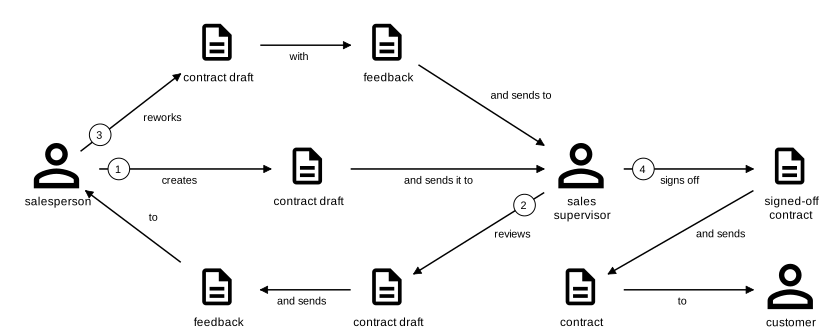
The Contract Send-Off
02.Find Activities & Artifacts
Language Appears Naturally
03.Deriving Domain Concepts
Artifact Entities
- Contract Draft
- Feedback
- Signed-Off Contract
Participant Entities
- Salesperson
- Sales Supervisor
- Customer
Contract Lifecycle
- Draft
- Submitted for review
- Rework required
- Signed-off
- Sent to Customer
Code or it
didn't happen!

Application Core Overview
Show me the code
Employees
Show me the code
// Entities
type Salesperson = {
  //... employee attributes,
  role: "salesperson";
  servedSegment: CustomerSegment;
};

type SalesSupervisor = {
  //... employee attributes,
  role: "sales supervisor";
};

type Employee = Salesperson | SalesSupervisor;

// Rules
function isSalesperson(employee: Employee): employee is Salesperson {
  /* ... */
}
Customers
Show me the code
type CustomerSegment = {
  // ...customer segment attributes
};

type Customer = {
  // ...customer attributes
  segment: CustomerSegment;
};
Artifacts
Show me the code
type ContractDraft = {
  // ... draft details
  id: string;
  author: Employee;
  status: "draft" | "submitted" | "reviewed" | "reworked" | "signed-off";
  customer: Customer;
  details: ContractDraftDetails;
};

type Feedback = {
  // ... feedback details
  author: Employee;
  subject: ContractDraft;
};

type Contract = {
  // ... contract details,
  author: Employee;
  approver: Employee;
  customer: Customer;
};
Use Case Examples
Show me the code
Drafting a Contract
- Triggered by salesperson
- Authorizes user for the action
- Validates input data
- Stores new contract draft
Approving a contract draft
- Triggered by sales supervisor
- Verifies users authorization
- Validates input data
- Stores new contract
- Updates contract draft
Draft Contract Use Case
Show me the code
type PortForDraftingContracts = (
  command: DraftContractCommand,
) => Promise<void>;

type DraftContractCommand = {
  author: Employee;
  customer: Customer;
  details: { /*...*/ };
};

const draftContract: PortForDraftingContracts = async ({
  author,
  customer,
  details,
}) => {
  /* ... */
};
Use Case Factory
Show me the code
function createDraftContractUseCase(
  dependencies: DraftContractDependencies,
): PortForDraftingContracts {
  return async function draftContract(cmd) {
    if (!isSalesperson(cmd.author) {
        throw new AuthorizationError(...)
    }
    if (!isValidDraftContractCommand(cmd)) {
      	throw new ValidationError(...)
    }

    await dependencies.contractDrafts.create({
      ...cmd,
      status: "draft",
    });
  };
}
type DraftContractDependencies = {
contractDrafts: PortForManagingContractDrafts;
};
type ContractDraftInsertDTO = {/*...*/};
type PortForManagingContractDrafts = {
create(
contractDraftInsert: ContractDraftInsertDTO
): Promise<void>;
findById(...): Promise<ContractDraft | undefined>;
};A Note on Style
Show me the code
interface PortForDraftingContracts {
  execute(command: DraftContractCommand): Promise<void>;
}

class DraftContractUseCase implements PortForDraftingContracts {
  constructor(dependencies: DraftContractDependencies) {
    //...
  }

  async execute({ author, details }) {
    //...
  }
}
Approve Draft Use Case
Show me the code
function createApproveContractDraftUseCase(dependencies: {
  contractDrafts: PortForManagingContractDrafts;
  contracts: PortForManagingContracts;
}): PortForApprovingContractDrafts {
  return async function approveContractDraft({ approver, contractDraftId }) {
    if (!isSalesSupervisor()) { /* error */}

    const contractDraft = await dependencies.contractDrafts.findById(contractDraftId);

    if (!exists(contractDraft)) { /* error */ }
    if (!isSubmitted(contractDraft)) {/* error */}

    await dependencies.contractDrafts.update(contractDraftId, { status: "signed-off" })

    await dependencies.contracts.storeContract({ /* ... new contract details */ });
  };
}
It's called Ports-and-Adapters for a reason!
- We have the business logic
- We have defined ports
- We do not have adapters yet
Adapting the Application
Show me the code
Implement Outgoing Ports
Show me the code
type PortForManagingContractDrafts = {
  create(
  	contractDraftInsert: ContractDraftInsertDTO
  ): Promise<void>;
  findById(...): Promise<ContractDraft | undefined>;
};

export function createSqliteContractDraftAdapter(dependencies: {
  db: Database;
}): PortForManagingContractDrafts {
  return {
    async create(contractDraftInsert) {
      dependencies.db
        .insert(contractDrafts)
        .values(toNewContractDraftRow(contractDraftInsert))
        .run();
    },
    async findById(contractDraftId) { /* ... */ },
  };
}
User-Fronting Systems
Show me the code
SalesFront
- Fullstack SvelteKit
- Frontend for Salespeople
- Plugs into Drafting Use Case
BossMove
- Ancient Desktop App
- Connects to Express API
- Frontend for Supervisors
- Plugs into Approval Use Case
SalesFront Remote Function
Show me the code
import { form, getRequestEvent } from "$app/server";

const createContractDraft = form(
  DraftContractInputDTOSchema, // https://standardschema.dev/ compliant
  async ({ customerId, title, ...rest }) => {
    const { locals } = getRequestEvent();

    try {
      await locals.draftContract({
        author: locals.currentEmployee,
        customer: await locals.loadCustomer(customerId),
        details: { title, ...rest },
      });
      return { success: true };
    } catch (e) {
      return { success: false, error: e.message };
    }
  },
);
SalesFront Draft Form
Show me the code
<script lang="ts">
	import { createContractDraft } from 'contractDrafts.remote.ts';
</script>

<h1>Create a new contract draft</h1>

<form {...createContractDraft}>
	<!-- form content goes here -->

	<button>Publish!</button>
</form>
BossMove Route
Show me the code
const databaseClient = createDatabaseClient({ url: ".bossmove.db" });

const container = createContainer().register({
  db: asValue(databaseClient.db),
  contractDrafts: asFunction(createSqliteContractDraftAdapter),
  contracts: asFunction(createSqliteContractAdapter),
  approveContractDraft: asFunction(createApproveContractDraftUseCase),
});

const app = express();

app.post("/contract-drafts/:id/approval", async (req, res) => {
  const approveContractDraft = container.resolve("approveContractDraft");
  await approveContractDraft({
    approver: req.user,
    contractDraftId: req.params.id,
  });
  res.send();
});
Where to Put What?
Show me the code
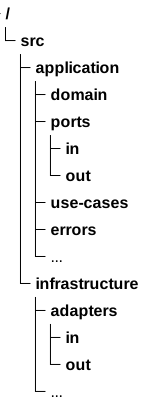
Folder structure is important (for readability)
- Alistair Cockburn in his talk “Hexagonal Architecture” in the version from 2025.
- The application core lives in
application - Adapters live in
infrastructure - Lint rules verify that
applicationdoes not import frominfrastructureor other places
Finishing Up with a Little Recap.
An actionable set of ideas for structuring software.
- Separate valuable business concerns from technical details
- Dependency Rule: source code dependencies point inward
- Hexagonal Architecture expresses the same core idea
Clean Architecture
Recap
Design the software from the inside out to realize a clean core.
- The core describes its needs
- The outer world fulfills them
- Adapters make systems replaceable
Practical Application
Recap
Thank you very much!
- Atmosphere / Bluesky: nilsroehrig.dev
- LinkedIn: in/nilsroehrig/
- E-Mail: info@nilsroehrig.de
- Code: nilsroehrig/contract-approval-flow